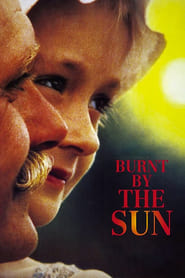
“Burnt by the Sun 1994” is a poignant tale of a once-shining star, now fading into obscurity. The film follows the life of a Soviet Army officer, betrayed by those he trusted most. His heart is left broken, as he watches his world crumble around him. With every passing moment, his once-bright future fades to black. In the end, there is only heartache and regret left in its wake.
CLICK HERE🠇🠇🠇📺_Watch Burnt by the Sun 1994 English Subtitles_
Review
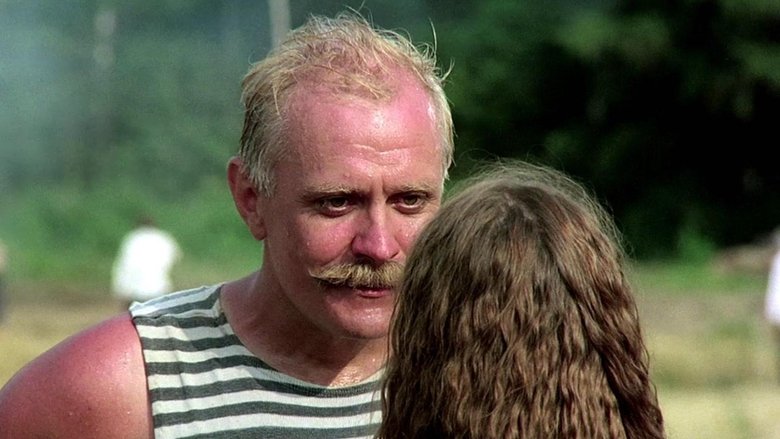
Burnt by the Sun is a remarkable film that depicts the Soviet era in Russia during the late 1930s. It tells a story of betrayal, love, and loss amidst political turmoil and oppression. Directed by Nikita Mikhalkov, it stars Mikhalkov himself as Colonel Sergei Petrovich Kotov, a former hero of the Russian Revolution who falls victim to Stalin’s Great Purge.
The movie starts with idyllic scenes of a rural village where Kotov lives with his second wife Marusia (Ingeborga Dapkunaite) and their daughter Nadia (Nadia Mikhalkova). The family seems to be living a peaceful life until one fateful day when Kotov’s past catches up with him. He is arrested by NKVD agents and taken to Moscow for interrogation.
As the plot unfolds, we get to learn more about Kotov’s relationship with his former comrade Mitia (Oleg Menshikov), who has turned into an ambitious officer in Stalin’s secret police. Mitia is jealous of Kotov’s success and wants revenge for an old grudge. He concocts a false accusation that links Kotov with anti-Soviet activities and labels him as a traitor.
The story is emotionally riveting as we witness how Kotov deals with accusations that could result in his execution. His loyalty to the Soviet cause is unwavering, but he realizes too late that being an old revolutionary does not protect him from Stalinist purges. His love for Marusia and Nadia provides solace in his darkest hours, but even they cannot save him from Mitia’s treachery.
The movie highlights some critical elements of Soviet history during Stalin’s reign as it portrays how people lived under fear every day. It captures the essence of political games played during those times as people chose sides and worked towards personal gains with no regard for morality. The director’s attention to detail in portraying even the smallest segments of rural life is evident, making the audience feel like they are in the middle of the Russian countryside.
One of the memorable scenes is when Kotov and Marusia dance to a romantic tune on a moonlit night. This scene is symbolic as it portrays their love for each other despite Kotov’s past indiscretions. It also indicates the calm before the storm that will shake their world and destroy their happiness forever.
The cast of Burnt by the Sun consists of notable actors who played their parts with unparalleled authenticity and brilliance. Mikhalkov’s portrayal of Kotov was intense, moving, and delivered with an undeniable passion that made us feel his character’s torment. Dapkunaite gave a powerful performance as Marusia, providing a calm yet resolute counterbalance to her husband’s stormy emotions. The child actress Nadia Mikhalkova played her part with outstanding poise and maturity, making us feel her character’s pain and confusion over what is happening around her.
The movie won an Oscar in 1995 for Best Foreign Language Film, cementing its place in cinematic history. The cinematography by Vilko Filac was exceptional, capturing every emotion and scene with delicate precision. The music by Eduard Artemyev perfectly captured every moment, heightening emotions at crucial moments.
Burnt by the Sun leaves an indelible mark on your heart and mind as it tells a poignant story about human nature amidst political upheavals. As Ariely would say, it teaches us about how our decisions can have far-reaching consequences beyond what we could ever imagine. It highlights how trust can be shattered by personal ambition and jealousy while emphasizing how love endures even in the darkest moments.
In conclusion, Burnt by the Sun is a masterpiece that will remain relevant despite time passing since its release date nearly three decades ago. It is a fine example of how Russian cinema can portray complex characters and storylines with sensitivity, depth, and emotion. It shows us that no matter how dark the times may be, there is still hope for humanity to prevail.
Technical Data
- Runtime : 135
- Release : 1994-05-01
- Genre : Drama
- Cast : Nikita Mikhalkov as Col. Sergei Petrovich Kotov, Oleg Menshikov as Dimitri (Mitya), Ingeborga Dapkūnaitė as Marusia, Vyacheslav Tikhonov as Vsevolod, Nadezhda Mikhalkova as Nadya Kotova
- Crew : Jean-Louis Piel as Co-Producer, André Rigaut as Sound, Enzo Meniconi as Editor, Vladimir Aronin as Production Design, Vladimir Sedov as Co-Producer
- Popularity 6.262
- Budget : $2,800,000
- Revenue : $2,616,503
- Company : Caméra One, Canal+, Studio Trite
- Summary : Russia, 1936: revolutionary hero Colonel Kotov is spending an idyllic summer in his dacha with his young wife and six-year-old daughter Nadia and other assorted family and friends. Things change dramatically with the unheralded arrival of Cousin Dmitri from Moscow, who charms the women and little Nadia with his games and pianistic bravura. But Kotov isn’t fooled: this is the time of Stalin’s repression, with telephone calls in the middle of the night spelling doom – and he knows that Dmitri isn’t paying a social call…
- Tagline : A moving and poignant story set against the corrupt politics of the Stalinist era.
